 industrialised craftsmanship: what hands remember
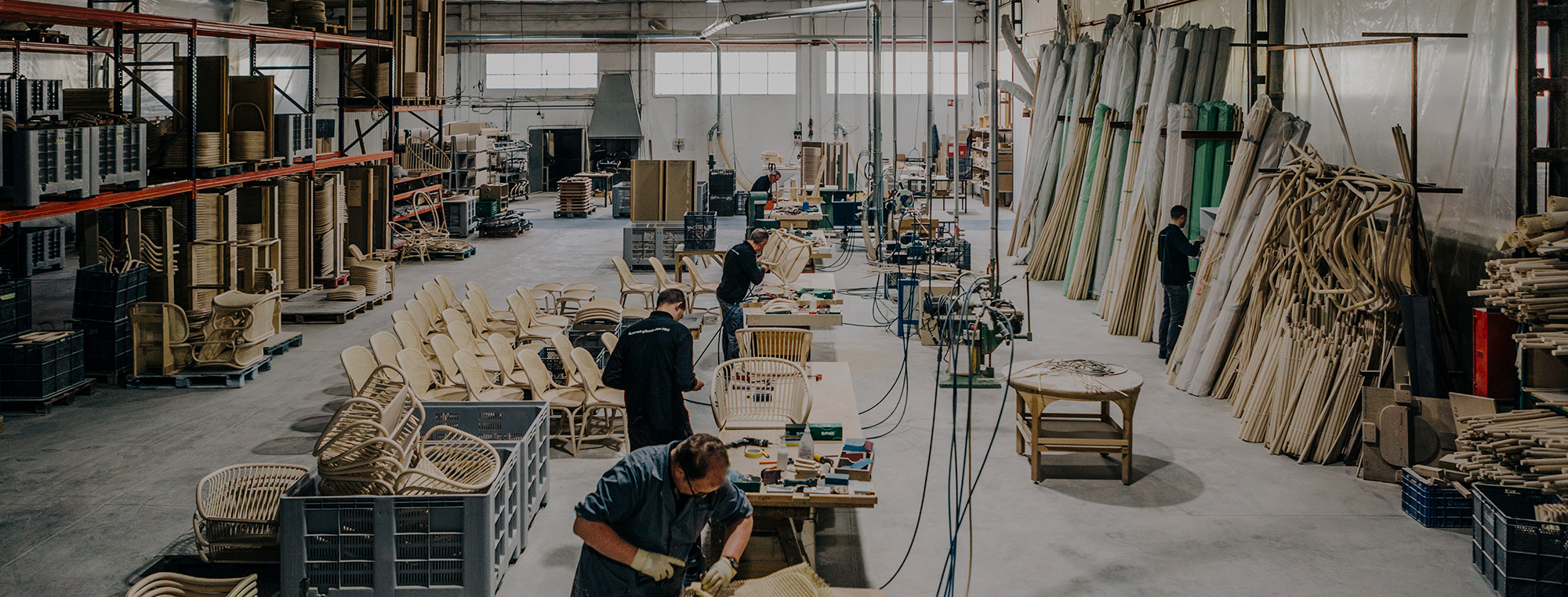
We all hold on to the memory of a piece of furniture that was always there: the rattan armchair on our grandparents’ terrace, the chair where someone sat to read every afternoon, the stool that moved from one home to the next without ever losing its place. Objects that were not bought for a season, but for a lifetime. At our factory in Moixent, we still make furniture with that intention. We work by hand wherever the hand matters, and with the help of technology wherever only precision is needed.
A craft with a memory
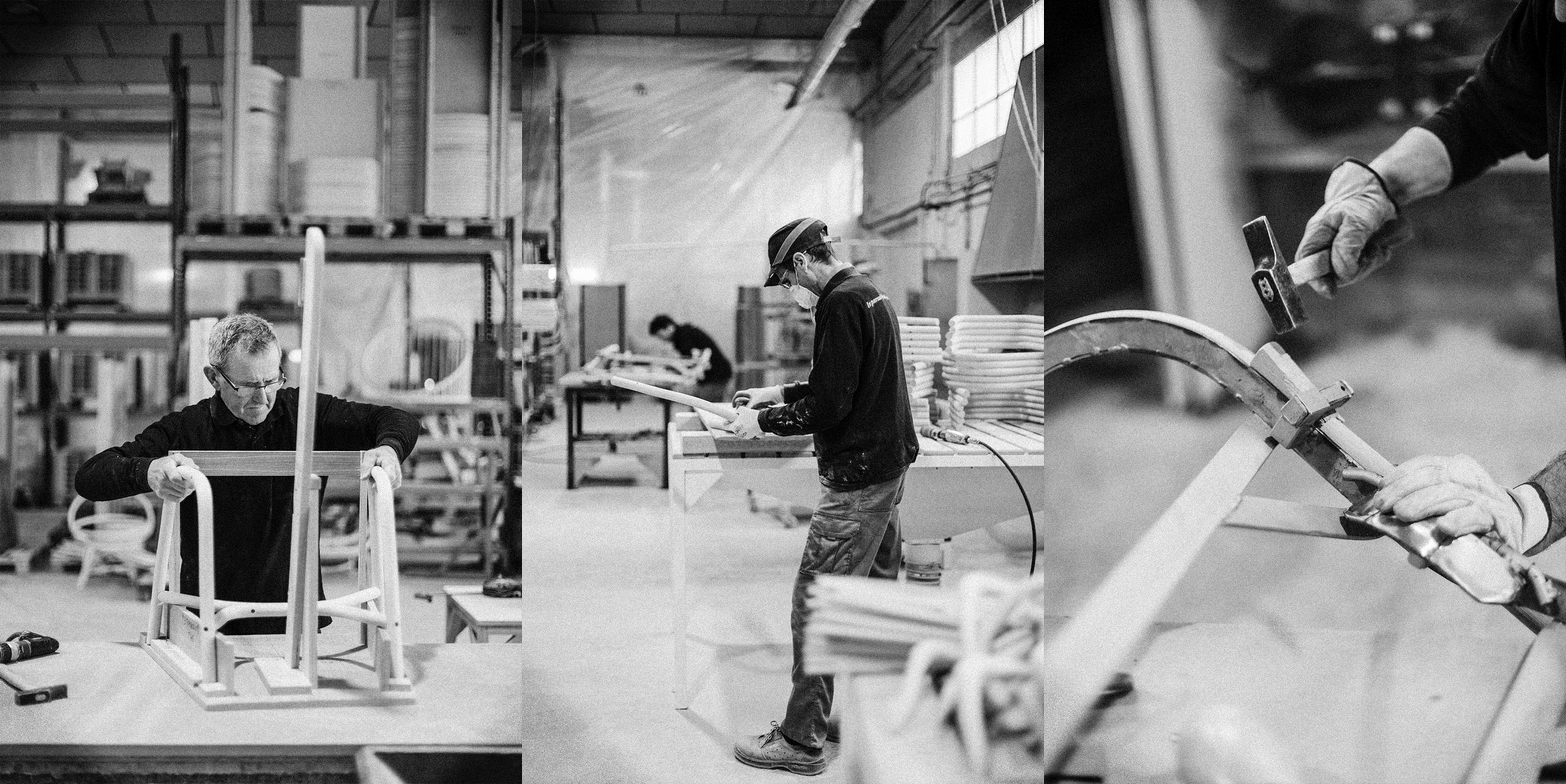
Rattan craftsmanship is not learnt from books. It is learnt alongside someone, watching how they work, repeating a gesture a thousand times until it stops being thought and starts being felt. That is how it has been handed down since 1960. Paco Melió has spent more than five decades at the factory, the same one where his mother worked before him. His hands hold more than technique: they hold a memory that is written down nowhere.
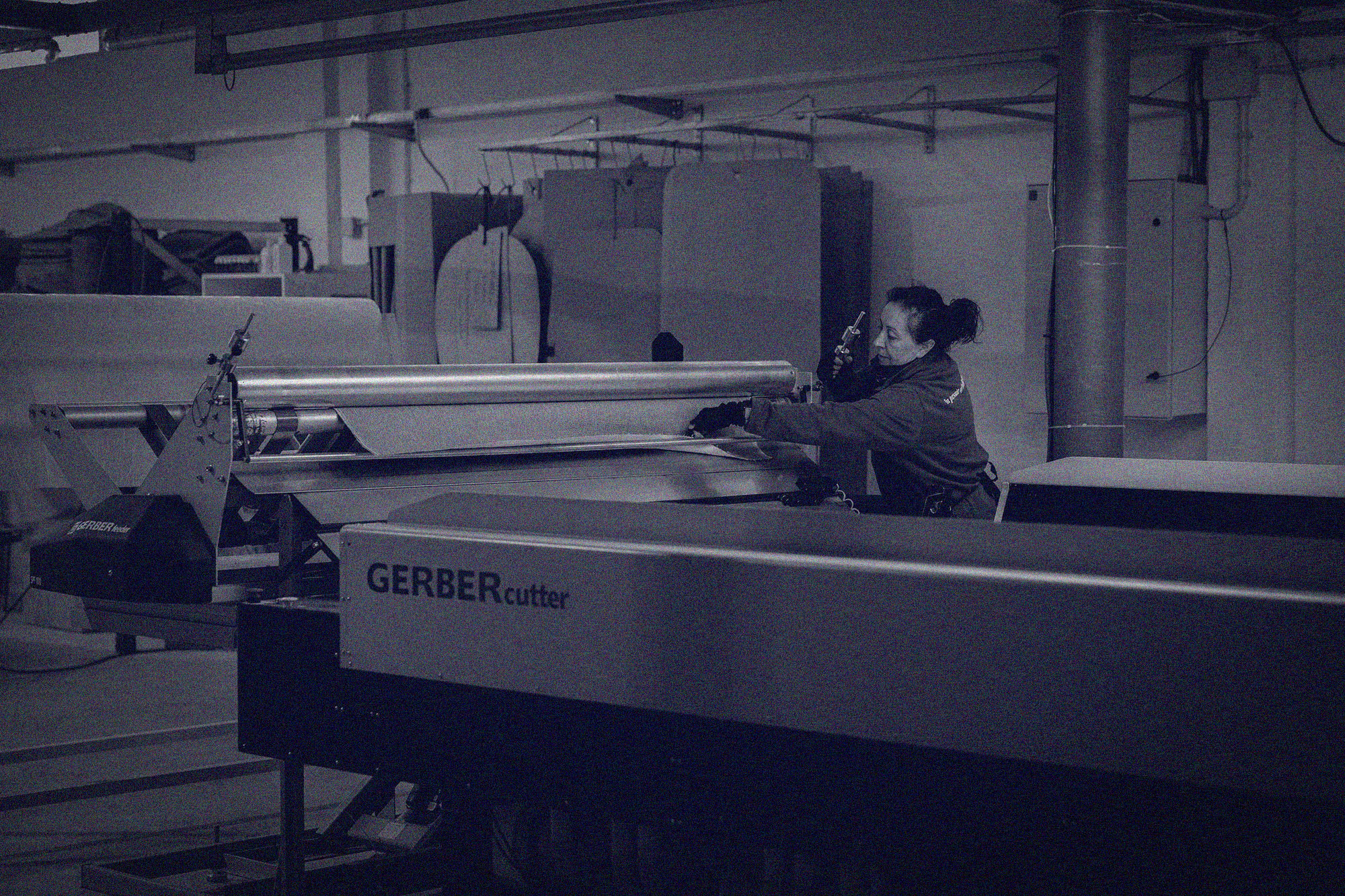
Today around 10 artisans shape every piece, across cutting, shaping, assembly, upholstery and painting. Each brings something of their own, and every piece carries a little of all of them.
The time each piece deserves
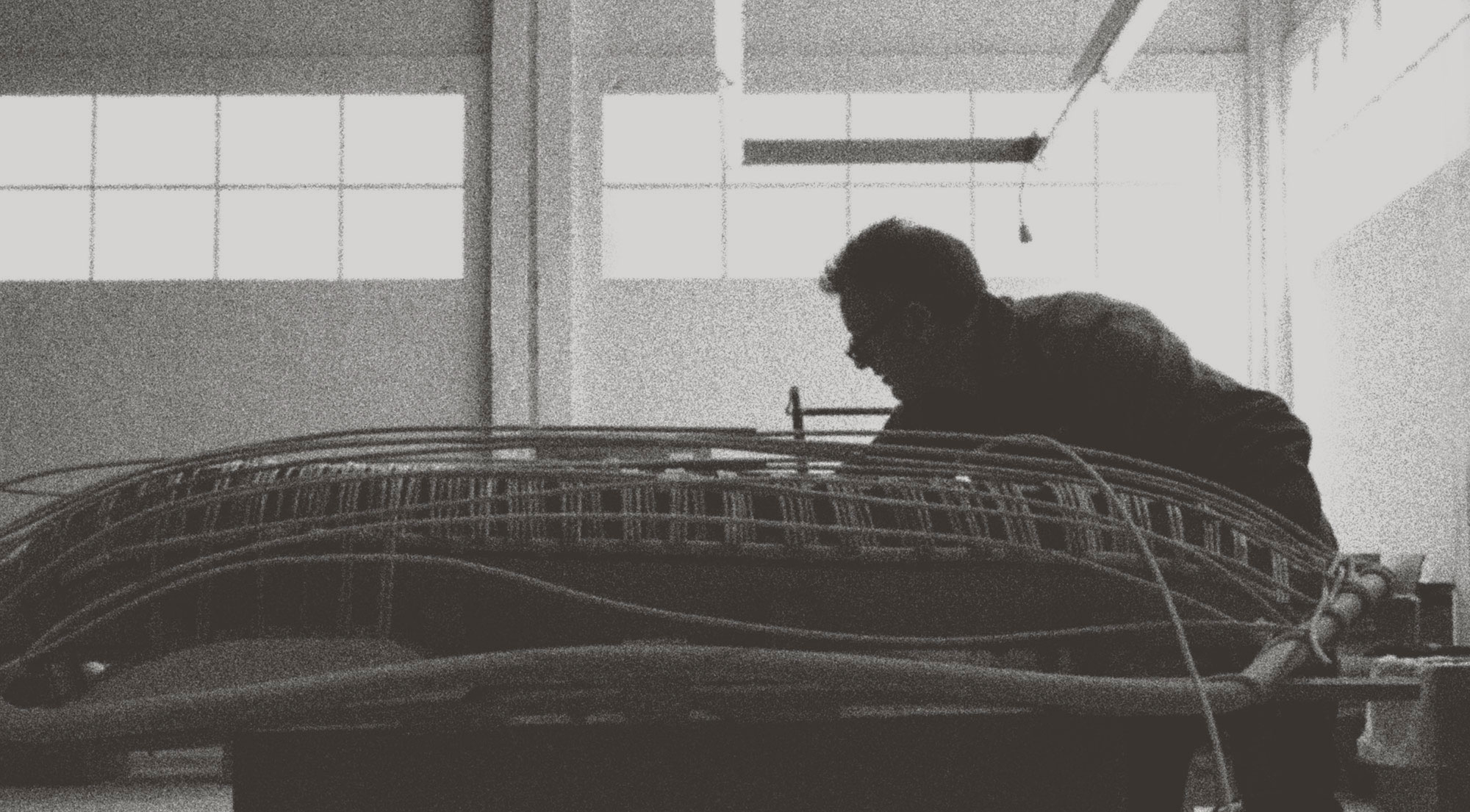
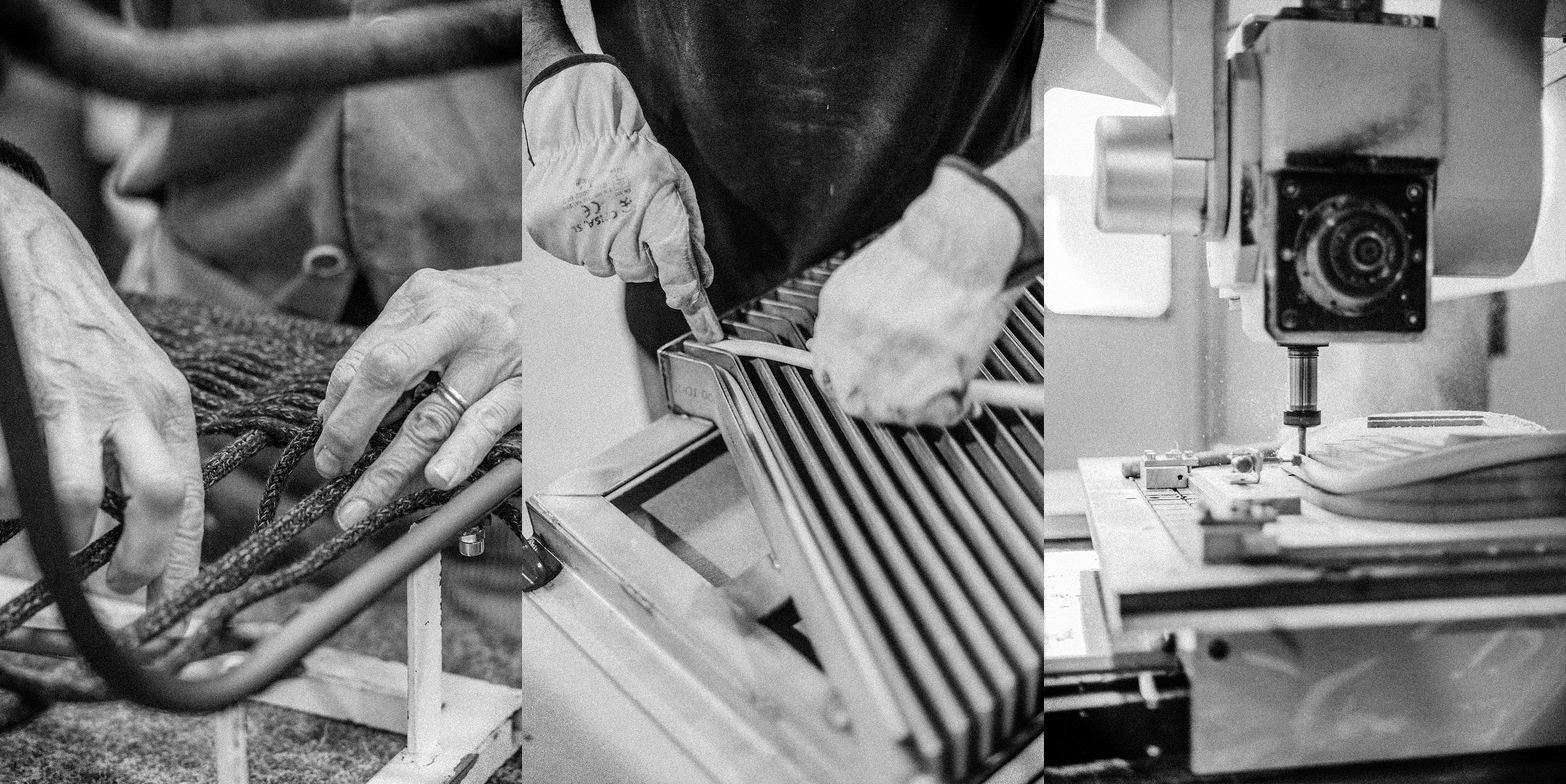
Some things can only be done slowly. Bending a rattan cane and feeling just how far it will give. Winding rope around the frame of a Lapala chair by Lievore Altherr Molina, or a Nido armchair by Javier Pastor, with exactly the right tension for the pattern to emerge. Following the curves of Oscar Tusquets Fontal armchair with a rattan weave so seamless you cannot tell where it begins or ends. That time cannot be shortened, and we would not want it to be. It is what turns a piece of furniture into something you love.
That is why, when a task does not call for that care, such as drilling, slotting or repeating the same operation over and over, we would rather a machine did it. Not to save time, but so that hands can spend theirs on what truly deserves it.
A machine that looks after the craft
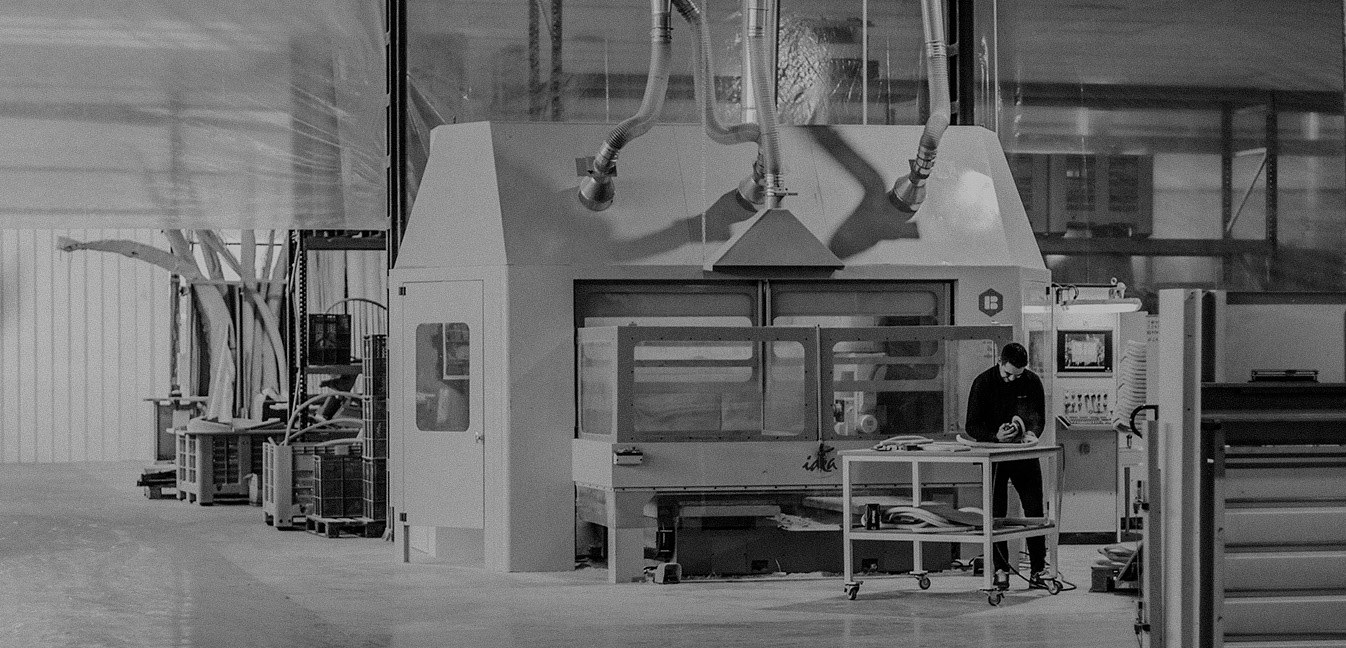
For around eight years, a five-axis CNC machine has been at work in our workshop, drilling and slotting rattan, wood and metal components with unwavering accuracy. It is operated by Moisés Miralles, Paco’s son-in-law. We like to think that is no coincidence: hand and machine, sitting at the same table, within the same family.
To us, that is what industrialised craftsmanship means: a way of protecting the craft, not replacing it. And of making sure it has a future, which is why we work with [vocational training centre] so that new generations can learn what Paco and so many others once learnt.
Because, in the end, what makes a piece of furniture stay with us for a lifetime is not the precision of a drill. It is knowing that someone, somewhere, made it with love.
We all hold on to the memory of a piece of furniture that was always there: the rattan armchair on our grandparents’ terrace, the chair where someone sat to read every afternoon, the stool that moved from one home to the next without ever losing its place. Objects that were not bought for a season, but for a lifetime. At our factory in Moixent, we still make furniture with that intention. We work by hand wherever the hand matters, and with the help of technology wherever only precision is needed.
A craft with a memory
Rattan craftsmanship is not learnt from books. It is learnt alongside someone, watching how they work, repeating a gesture a thousand times until it stops being thought and starts being felt. That is how it has been handed down since 1960. Paco Melió has spent more than five decades at the factory, the same one where his mother worked before him. His hands hold more than technique: they hold a memory that is written down nowhere.
Today around 10 artisans shape every piece, across cutting, shaping, assembly, upholstery and painting. Each brings something of their own, and every piece carries a little of all of them.
The time each piece deserves
Some things can only be done slowly. Bending a rattan cane and feeling just how far it will give. Winding rope around the frame of a Lapala chair by Lievore Altherr Molina, or a Nido armchair by Javier Pastor, with exactly the right tension for the pattern to emerge. Following the curves of Oscar Tusquets Fontal armchair with a rattan weave so seamless you cannot tell where it begins or ends. That time cannot be shortened, and we would not want it to be. It is what turns a piece of furniture into something you love.
That is why, when a task does not call for that care, such as drilling, slotting or repeating the same operation over and over, we would rather a machine did it. Not to save time, but so that hands can spend theirs on what truly deserves it.
A machine that looks after the craft
For around eight years, a five-axis CNC machine has been at work in our workshop, drilling and slotting rattan, wood and metal components with unwavering accuracy. It is operated by Moisés Miralles, Paco’s son-in-law. We like to think that is no coincidence: hand and machine, sitting at the same table, within the same family.
To us, that is what industrialised craftsmanship means: a way of protecting the craft, not replacing it. And of making sure it has a future, which is why we work with [vocational training centre] so that new generations can learn what Paco and so many others once learnt.
Because, in the end, what makes a piece of furniture stay with us for a lifetime is not the precision of a drill. It is knowing that someone, somewhere, made it with love.
industrialised craftsmanship: what hands remember
We all hold on to the memory of a piece of furniture that was always there: the rattan armchair on our grandparents’ terrace, the chair where someone sat to read every afternoon, the stool that moved from one home to the next without ever losing its place. Objects that were not bought for a season, but for a lifetime. At our factory in Moixent, we still make furniture with that intention. We work by hand wherever the hand matters, and with the help of technology wherever only precision is needed.
A craft with a memory
Rattan craftsmanship is not learnt from books. It is learnt alongside someone, watching how they work, repeating a gesture a thousand times until it stops being thought and starts being felt. That is how it has been handed down since 1960. Paco Melió has spent more than five decades at the factory, the same one where his mother worked before him. His hands hold more than technique: they hold a memory that is written down nowhere.
Today around 10 artisans shape every piece, across cutting, shaping, assembly, upholstery and painting. Each brings something of their own, and every piece carries a little of all of them.
The time each piece deserves
Some things can only be done slowly. Bending a rattan cane and feeling just how far it will give. Winding rope around the frame of a Lapala chair by Lievore Altherr Molina, or a Nido armchair by Javier Pastor, with exactly the right tension for the pattern to emerge. Following the curves of Oscar Tusquets Fontal armchair with a rattan weave so seamless you cannot tell where it begins or ends. That time cannot be shortened, and we would not want it to be. It is what turns a piece of furniture into something you love.
That is why, when a task does not call for that care, such as drilling, slotting or repeating the same operation over and over, we would rather a machine did it. Not to save time, but so that hands can spend theirs on what truly deserves it.
A machine that looks after the craft
For around eight years, a five-axis CNC machine has been at work in our workshop, drilling and slotting rattan, wood and metal components with unwavering accuracy. It is operated by Moisés Miralles, Paco’s son-in-law. We like to think that is no coincidence: hand and machine, sitting at the same table, within the same family.
To us, that is what industrialised craftsmanship means: a way of protecting the craft, not replacing it. And of making sure it has a future, which is why we work with [vocational training centre] so that new generations can learn what Paco and so many others once learnt.
Because, in the end, what makes a piece of furniture stay with us for a lifetime is not the precision of a drill. It is knowing that someone, somewhere, made it with love.
We all hold on to the memory of a piece of furniture that was always there: the rattan armchair on our grandparents’ terrace, the chair where someone sat to read every afternoon, the stool that moved from one home to the next without ever losing its place. Objects that were not bought for a season, but for a lifetime. At our factory in Moixent, we still make furniture with that intention. We work by hand wherever the hand matters, and with the help of technology wherever only precision is needed.
A craft with a memory
Rattan craftsmanship is not learnt from books. It is learnt alongside someone, watching how they work, repeating a gesture a thousand times until it stops being thought and starts being felt. That is how it has been handed down since 1960. Paco Melió has spent more than five decades at the factory, the same one where his mother worked before him. His hands hold more than technique: they hold a memory that is written down nowhere.
Today around 10 artisans shape every piece, across cutting, shaping, assembly, upholstery and painting. Each brings something of their own, and every piece carries a little of all of them.
The time each piece deserves
Some things can only be done slowly. Bending a rattan cane and feeling just how far it will give. Winding rope around the frame of a Lapala chair by Lievore Altherr Molina, or a Nido armchair by Javier Pastor, with exactly the right tension for the pattern to emerge. Following the curves of Oscar Tusquets Fontal armchair with a rattan weave so seamless you cannot tell where it begins or ends. That time cannot be shortened, and we would not want it to be. It is what turns a piece of furniture into something you love.
That is why, when a task does not call for that care, such as drilling, slotting or repeating the same operation over and over, we would rather a machine did it. Not to save time, but so that hands can spend theirs on what truly deserves it.
A machine that looks after the craft
For around eight years, a five-axis CNC machine has been at work in our workshop, drilling and slotting rattan, wood and metal components with unwavering accuracy. It is operated by Moisés Miralles, Paco’s son-in-law. We like to think that is no coincidence: hand and machine, sitting at the same table, within the same family.
To us, that is what industrialised craftsmanship means: a way of protecting the craft, not replacing it. And of making sure it has a future, which is why we work with [vocational training centre] so that new generations can learn what Paco and so many others once learnt.
Because, in the end, what makes a piece of furniture stay with us for a lifetime is not the precision of a drill. It is knowing that someone, somewhere, made it with love.