 designing beyond what meets the eye
There are decisions whose impact isn’t visible at first glance. They don’t change the shape of a chair, the feel of a fabric, or the beauty of a piece of wood. And yet, these are precisely the decisions that determine how we want to manufacture today and what legacy we want to leave tomorrow.
At Expormim, we understand sustainability as an exercise in continuous improvement. It isn’t about reaching a final goal, but about a way of reviewing every process, questioning every decision, and continuing to move forward, with the same attention to detail that we apply to the design of every piece.
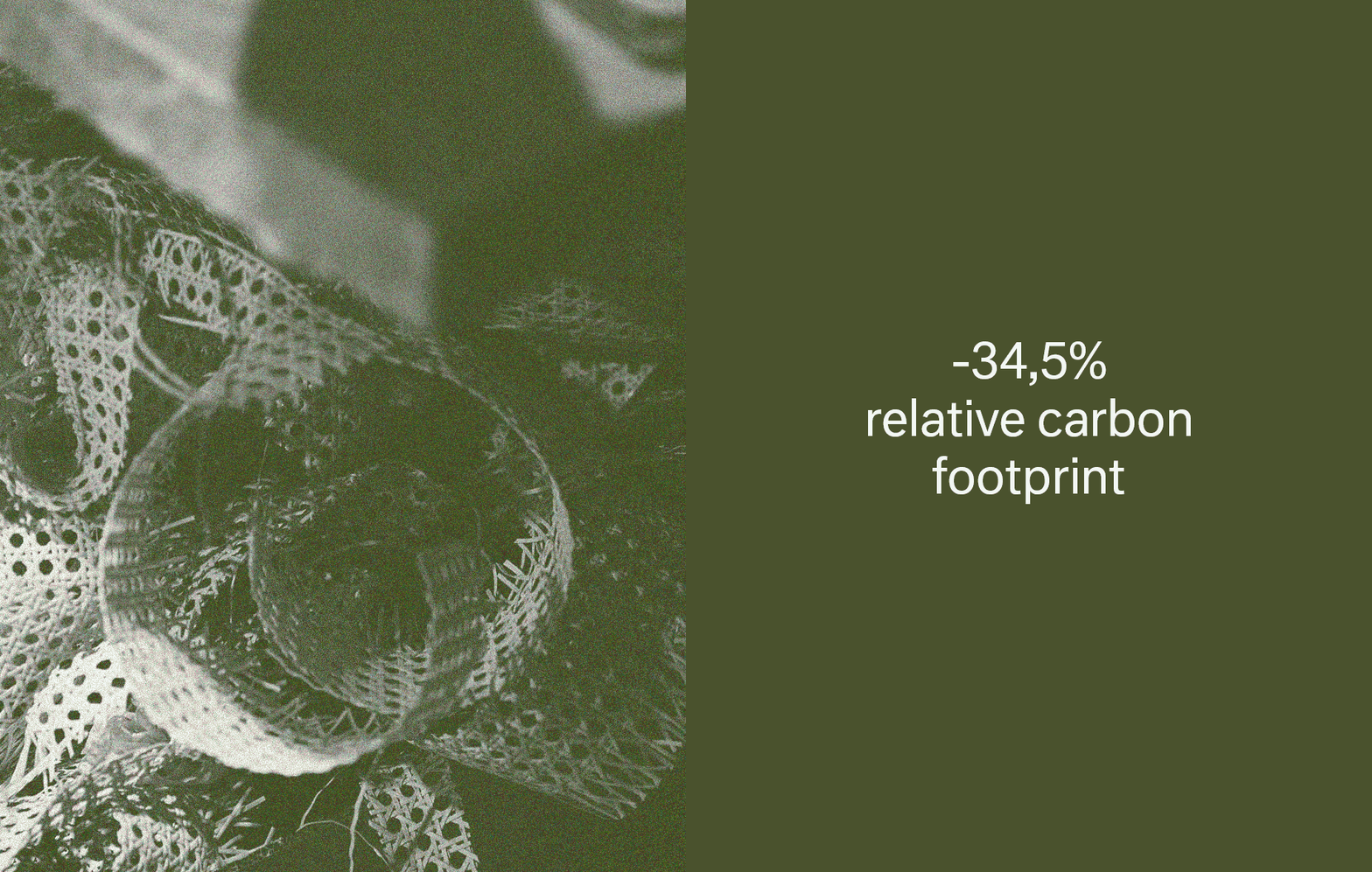
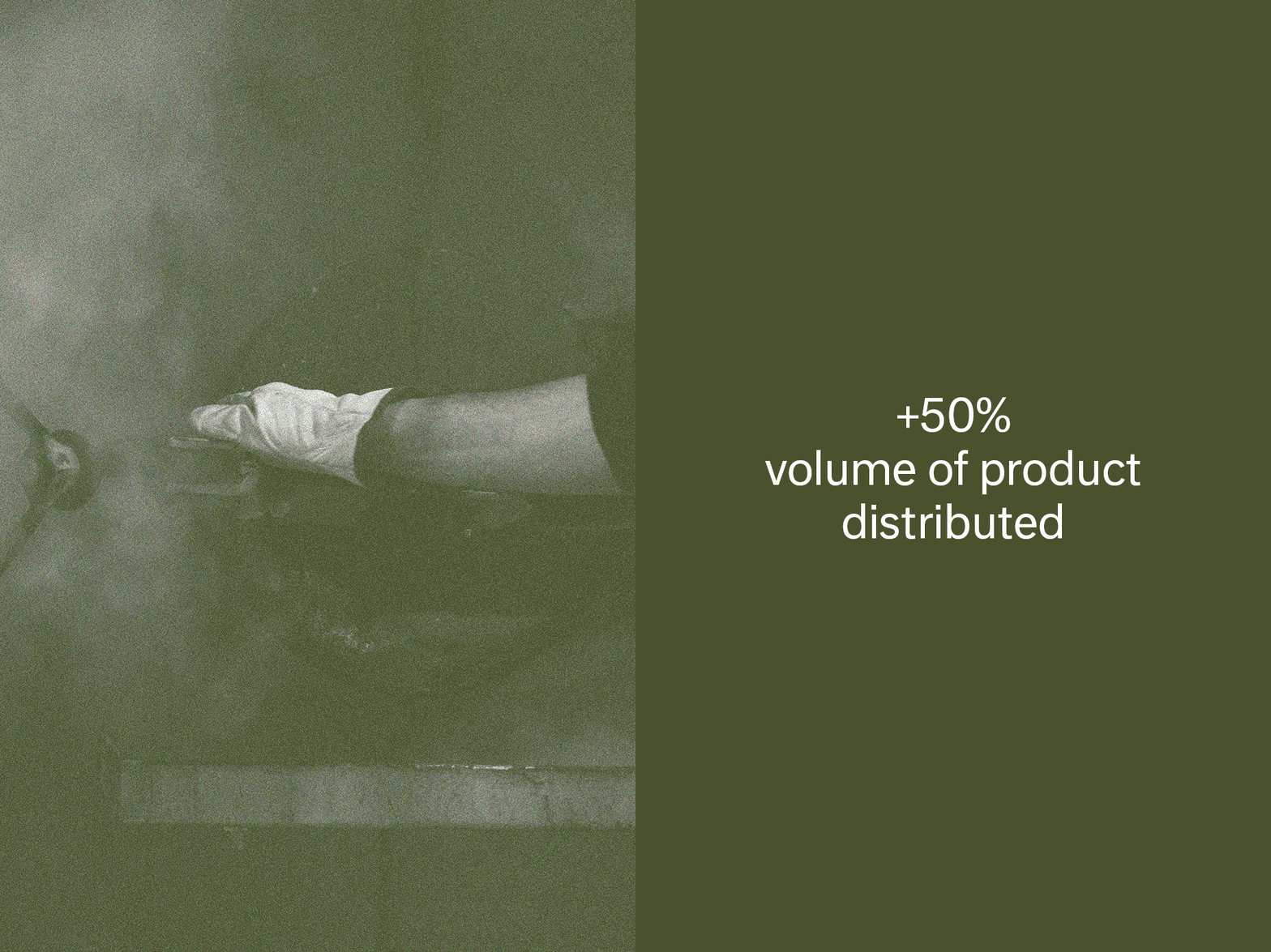
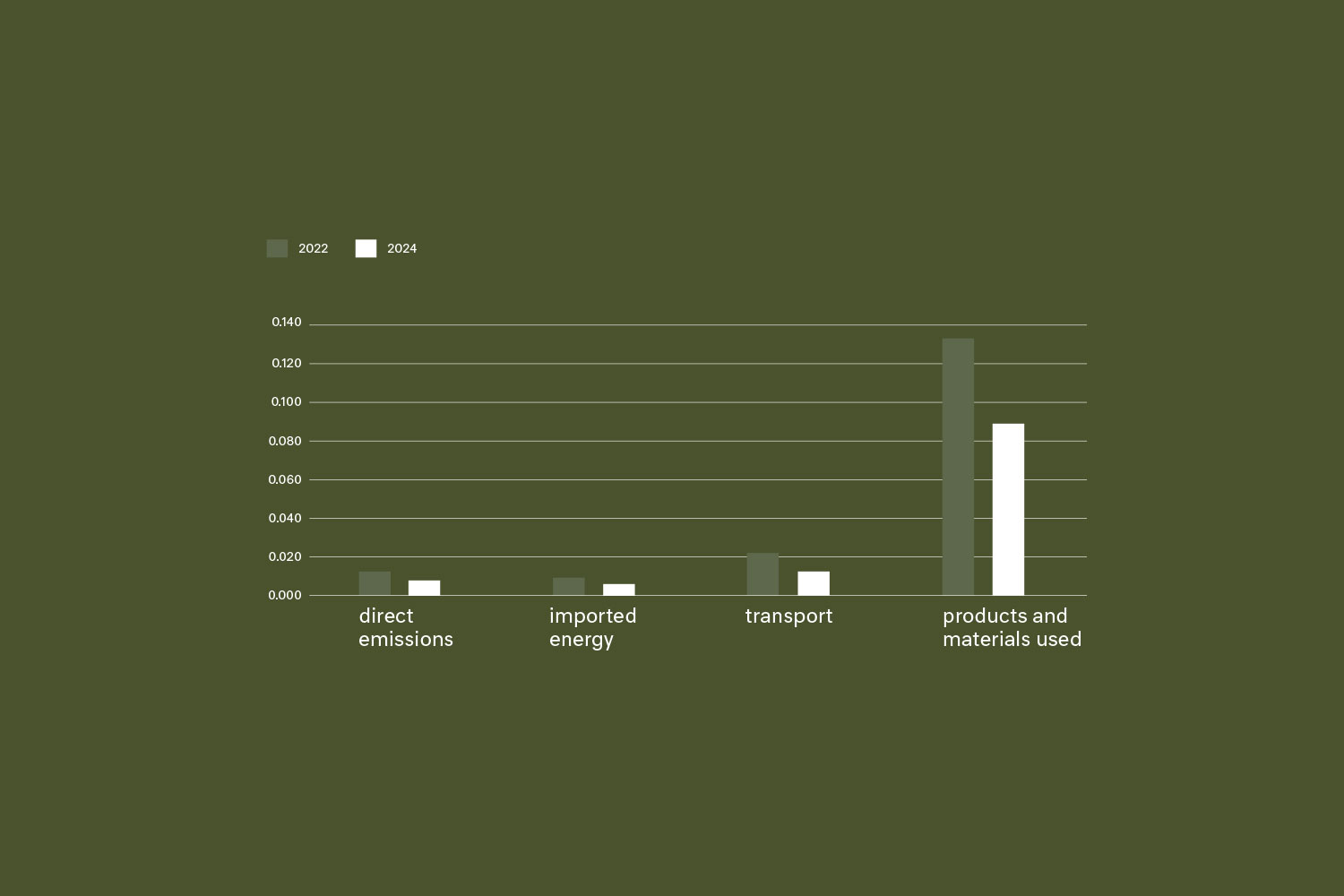
The results of our latest carbon footprint study reflect that commitment. Between 2022 and 2024, we reduced our organization’s relative carbon footprint by 34.5%, going from 0.17 to 0.11 tonnes of CO₂ equivalent per tonne of product distributed. That figure is significant on its own. But it becomes even more meaningful in context: during that same period, the volume of product distributed grew by more than 50%. In other words, today we manufacture and distribute more furniture, and we do so while generating a significantly lower impact for every piece that reaches our customers.
This progress is the result of many actions that, added together, make the difference: greater energy efficiency, the use of our photovoltaic installation, the continuous optimization of production processes, and increasingly rigorous resource management. These are not isolated gestures, but part of one shared commitment.
Measuring our impact, however, also means understanding where the biggest challenges lie. The study confirms that most of our carbon footprint is concentrated in raw materials. This finding reinforces our commitment to eco-design, responsible material selection, and the progressive incorporation of recycled alternatives with lower environmental impact. This work has already begun, and it will continue to guide our next steps.
There’s something we’ve always believed at Expormim: the best design is the kind that stands the test of time. Creating pieces meant to accompany several generations is, in itself, a way of reducing environmental impact — because furniture that lasts doesn’t need to be replaced. Now we want that same logic to shape the way we conceive and manufacture every piece as well.
Because sustainability isn’t an attribute added at the end of the process. It’s a way of thinking. And, increasingly, a way of designing.
There are decisions whose impact isn’t visible at first glance. They don’t change the shape of a chair, the feel of a fabric, or the beauty of a piece of wood. And yet, these are precisely the decisions that determine how we want to manufacture today and what legacy we want to leave tomorrow.
At Expormim, we understand sustainability as an exercise in continuous improvement. It isn’t about reaching a final goal, but about a way of reviewing every process, questioning every decision, and continuing to move forward, with the same attention to detail that we apply to the design of every piece.
The results of our latest carbon footprint study reflect that commitment. Between 2022 and 2024, we reduced our organization’s relative carbon footprint by 34.5%, going from 0.17 to 0.11 tonnes of CO₂ equivalent per tonne of product distributed. That figure is significant on its own. But it becomes even more meaningful in context: during that same period, the volume of product distributed grew by more than 50%. In other words, today we manufacture and distribute more furniture, and we do so while generating a significantly lower impact for every piece that reaches our customers.
This progress is the result of many actions that, added together, make the difference: greater energy efficiency, the use of our photovoltaic installation, the continuous optimization of production processes, and increasingly rigorous resource management. These are not isolated gestures, but part of one shared commitment.
Measuring our impact, however, also means understanding where the biggest challenges lie. The study confirms that most of our carbon footprint is concentrated in raw materials. This finding reinforces our commitment to eco-design, responsible material selection, and the progressive incorporation of recycled alternatives with lower environmental impact. This work has already begun, and it will continue to guide our next steps.
There’s something we’ve always believed at Expormim: the best design is the kind that stands the test of time. Creating pieces meant to accompany several generations is, in itself, a way of reducing environmental impact — because furniture that lasts doesn’t need to be replaced. Now we want that same logic to shape the way we conceive and manufacture every piece as well.
Because sustainability isn’t an attribute added at the end of the process. It’s a way of thinking. And, increasingly, a way of designing.
There are decisions whose impact isn’t visible at first glance. They don’t change the shape of a chair, the feel of a fabric, or the beauty of a piece of wood. And yet, these are precisely the decisions that determine how we want to manufacture today and what legacy we want to leave tomorrow.
At Expormim, we understand sustainability as an exercise in continuous improvement. It isn’t about reaching a final goal, but about a way of reviewing every process, questioning every decision, and continuing to move forward, with the same attention to detail that we apply to the design of every piece.
The results of our latest carbon footprint study reflect that commitment. Between 2022 and 2024, we reduced our organization’s relative carbon footprint by 34.5%, going from 0.17 to 0.11 tonnes of CO₂ equivalent per tonne of product distributed. That figure is significant on its own. But it becomes even more meaningful in context: during that same period, the volume of product distributed grew by more than 50%. In other words, today we manufacture and distribute more furniture, and we do so while generating a significantly lower impact for every piece that reaches our customers.
designing beyond what meets the eye
There are decisions whose impact isn’t visible at first glance. They don’t change the shape of a chair, the feel of a fabric, or the beauty of a piece of wood. And yet, these are precisely the decisions that determine how we want to manufacture today and what legacy we want to leave tomorrow.
At Expormim, we understand sustainability as an exercise in continuous improvement. It isn’t about reaching a final goal, but about a way of reviewing every process, questioning every decision, and continuing to move forward, with the same attention to detail that we apply to the design of every piece.
The results of our latest carbon footprint study reflect that commitment. Between 2022 and 2024, we reduced our organization’s relative carbon footprint by 34.5%, going from 0.17 to 0.11 tonnes of CO₂ equivalent per tonne of product distributed. That figure is significant on its own. But it becomes even more meaningful in context: during that same period, the volume of product distributed grew by more than 50%. In other words, today we manufacture and distribute more furniture, and we do so while generating a significantly lower impact for every piece that reaches our customers.
This progress is the result of many actions that, added together, make the difference: greater energy efficiency, the use of our photovoltaic installation, the continuous optimization of production processes, and increasingly rigorous resource management. These are not isolated gestures, but part of one shared commitment.
Measuring our impact, however, also means understanding where the biggest challenges lie. The study confirms that most of our carbon footprint is concentrated in raw materials. This finding reinforces our commitment to eco-design, responsible material selection, and the progressive incorporation of recycled alternatives with lower environmental impact. This work has already begun, and it will continue to guide our next steps.
There’s something we’ve always believed at Expormim: the best design is the kind that stands the test of time. Creating pieces meant to accompany several generations is, in itself, a way of reducing environmental impact — because furniture that lasts doesn’t need to be replaced. Now we want that same logic to shape the way we conceive and manufacture every piece as well.
Because sustainability isn’t an attribute added at the end of the process. It’s a way of thinking. And, increasingly, a way of designing.
There are decisions whose impact isn’t visible at first glance. They don’t change the shape of a chair, the feel of a fabric, or the beauty of a piece of wood. And yet, these are precisely the decisions that determine how we want to manufacture today and what legacy we want to leave tomorrow.
At Expormim, we understand sustainability as an exercise in continuous improvement. It isn’t about reaching a final goal, but about a way of reviewing every process, questioning every decision, and continuing to move forward, with the same attention to detail that we apply to the design of every piece.
The results of our latest carbon footprint study reflect that commitment. Between 2022 and 2024, we reduced our organization’s relative carbon footprint by 34.5%, going from 0.17 to 0.11 tonnes of CO₂ equivalent per tonne of product distributed. That figure is significant on its own. But it becomes even more meaningful in context: during that same period, the volume of product distributed grew by more than 50%. In other words, today we manufacture and distribute more furniture, and we do so while generating a significantly lower impact for every piece that reaches our customers.
This progress is the result of many actions that, added together, make the difference: greater energy efficiency, the use of our photovoltaic installation, the continuous optimization of production processes, and increasingly rigorous resource management. These are not isolated gestures, but part of one shared commitment.
Measuring our impact, however, also means understanding where the biggest challenges lie. The study confirms that most of our carbon footprint is concentrated in raw materials. This finding reinforces our commitment to eco-design, responsible material selection, and the progressive incorporation of recycled alternatives with lower environmental impact. This work has already begun, and it will continue to guide our next steps.
There’s something we’ve always believed at Expormim: the best design is the kind that stands the test of time. Creating pieces meant to accompany several generations is, in itself, a way of reducing environmental impact — because furniture that lasts doesn’t need to be replaced. Now we want that same logic to shape the way we conceive and manufacture every piece as well.
Because sustainability isn’t an attribute added at the end of the process. It’s a way of thinking. And, increasingly, a way of designing.
There are decisions whose impact isn’t visible at first glance. They don’t change the shape of a chair, the feel of a fabric, or the beauty of a piece of wood. And yet, these are precisely the decisions that determine how we want to manufacture today and what legacy we want to leave tomorrow.
At Expormim, we understand sustainability as an exercise in continuous improvement. It isn’t about reaching a final goal, but about a way of reviewing every process, questioning every decision, and continuing to move forward, with the same attention to detail that we apply to the design of every piece.
The results of our latest carbon footprint study reflect that commitment. Between 2022 and 2024, we reduced our organization’s relative carbon footprint by 34.5%, going from 0.17 to 0.11 tonnes of CO₂ equivalent per tonne of product distributed. That figure is significant on its own. But it becomes even more meaningful in context: during that same period, the volume of product distributed grew by more than 50%. In other words, today we manufacture and distribute more furniture, and we do so while generating a significantly lower impact for every piece that reaches our customers.